
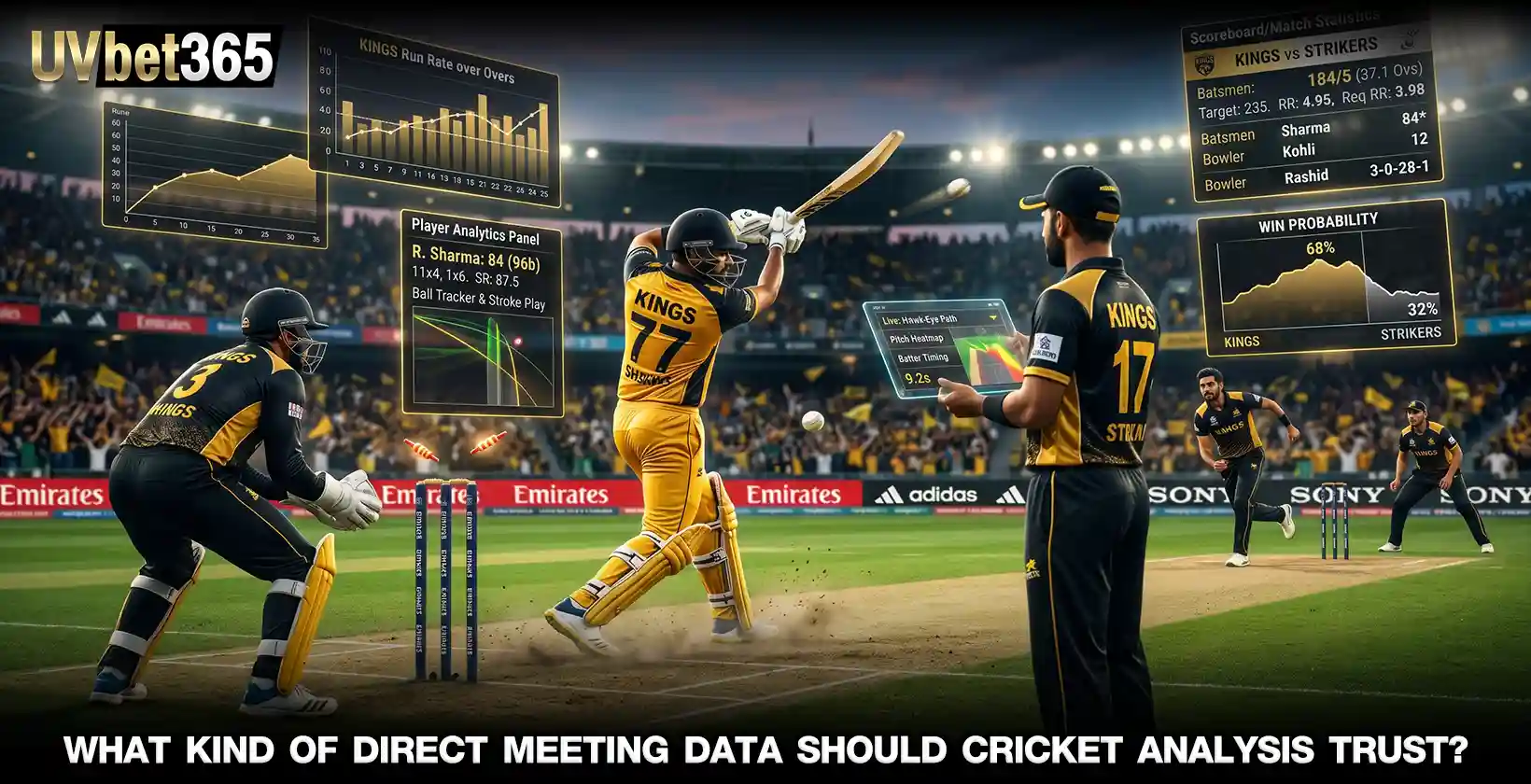
Cricket analysis using head-to-head records can be useful when Historical Data remains relevant enough to support interpretation. For example, both squads may still have a similar structure, the tournament setup may not have changed significantly, and the game situation may still reflect the current context. However, if the record is too old, the team’s core has changed, or the teams have met too few times to show a clear pattern, that information should be treated with less importance or separated from the analysis.
This article focuses on assessing older results so readers can understand which statistics should support interpretation and which should not become the main basis for evaluating a match.
What Is Cricket Analysis With Head-To-Head, And How Should It Be Used?
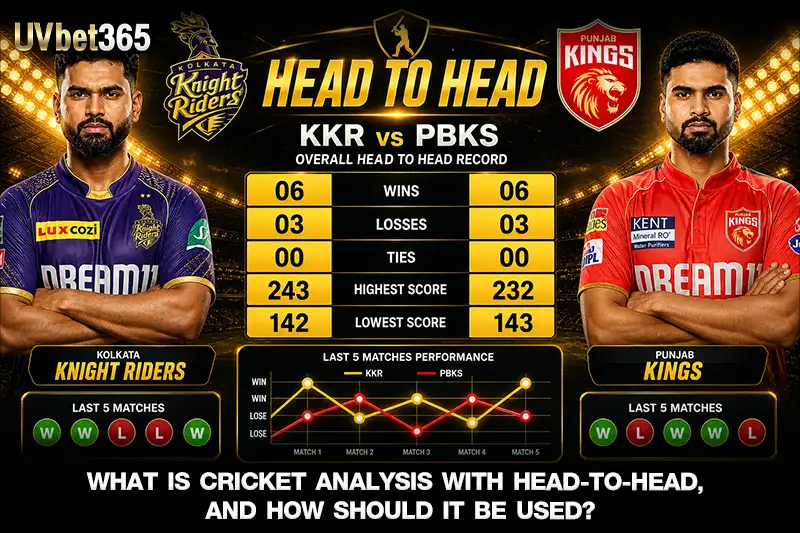
Head-to-head refers to the direct meeting record between two teams in the past. It is one form of Cricket Statistics and is often used to review how previous contests between the same teams unfolded, which team performed better, or whether their encounters show a repeated pattern.
In the context of cricket betting, this information is often used as Data For Decision Making to understand both competitors before making a decision. It does not directly predict the result. This also helps answer Why Is Statistics Important, because statistics serve as supporting evidence, but their reliability must still be checked before they are applied in practice.
Head-to-head references are useful as historical context because they can reveal how two competitors have performed against each other. However, this information must always be evaluated carefully, as past patterns may no longer apply once conditions change.
When used before entering Online Betting environments, this type of information should be treated as a reference point rather than a standalone decision factor.
Basic Limitations Of Older Results
The main limitation of head to head history is that previous results do not always reflect the present. The age of the record, the number of meetings, and the contest setting all affect reliability.
If two sides met a long time ago, the information may relate to players, coaching staff, or conditions that are no longer relevant. In addition, if they have met only once or twice, the result may reflect a specific situation rather than a repeatable pattern.
Which Direct Meeting Records Carry Enough Value To Support Decision-Making?
The Historical Data for this pairing is useful only when it still reflects the present situation of both squads. It should not be judged solely past win-loss numbers.
The key factors include structural continuity, a similar type of contest, and a game situation that remains relevant to current conditions.
An example of applying logic when Comparing Statistics is this: if the team structure remains similar, the format is unchanged, and the surrounding conditions are still relevant, earlier results can support decision-making. However, they should still be used as supporting references rather than final conclusions. Even when the numbers appear meaningful, they cannot determine outcomes with certainty.
Filters For Older Results That Can Still Be Used
There are three main filters for assessing whether a past record is still usable:
- Team Continuity: The player core or team direction has not changed too much
- Competition Format: The information should come from a similar type of game
- Present Relevance: The games referenced should still still reflect current conditions
If the information passes all three conditions, That Statistic Can Still Strengthen The Overall View. Still, it must be checked alongside other factors before reaching a conclusion.
Which Head-to-Head Metrics Should Be Removed Because They Lack Reliability?
Past records lose reliability when they no longer reflect the current state of the teams. Even if the numbers appear interesting, they should not be used as the main basis for analysis if they are outdated, if team structure has changed significantly, or if the sample size is too small.
Older references often create issues because they relate to a period when many factors were different. For example, if a team has replaced key players or changed its playing approach, earlier results may no longer represent the current squad. Similarly, when the number of meetings is limited, results may reflect isolated events rather than consistent patterns.
Signs That Past Records Are Becoming Less Reliable
Indicators that reduce reliability include:
- Records from a much earlier period
- Clear structural changes within the squad
- A sample size too small to show repeated patterns
If these factors appear together, the evidence should be used cautiously or excluded to avoid misleading interpretation.
How Should Historical Records Be Used With Other Information To Avoid Misinterpretation?
For stronger Cricket Analysis, head-to-head records should be used alongside other references, especially recent form and match-specific factors. Past results only show what happened previously; they do not confirm that current conditions are identical.
A structured approach is to begin by Analyzing Statistics, first checking whether the head-to-head record remains relevant, then comparing it with present information without allowing past results to dominate the overall evaluation.
If previous records suggest that one team performed better, but current circumstances do not support that pattern, the earlier results should not be followed blindly. On the other hand, if past and present factors align, the evidence can strengthen the overall interpretation.
In structured evaluation environments, this information should support the overall picture in Cricket Betting rather than replace current evidence.
How To Position Historical Records As Supporting Information
The correct approach is to treat these records as Data For Decision Making, serving as a secondary layer of analysis rather than the primary basis.
- First, assess whether older results are still reliable
- Then compare them with current conditions
- Reduce their importance if conflicts appear
This prevents selective interpretation based on prior assumptions.
What Mistakes Make The Use Of Head-To-Head Statistics Less Reliable?
A common mistake in Cricket Statistics is relying too heavily on historical results and assuming that previous advantages will continue. In reality, team structure, tournament setup, and playing conditions may have changed.
Another mistake is selective information use—focusing only on results that support a preferred view while ignoring conflicting evidence.
These practices reduce reliability because they prioritize Head-To-Head Statistics for confirmation over objective evaluation.
Being Anchored To The Past And Choosing Evidence That Confirms Your View
Two major issues affect analysis quality:
- Anchoring Bias: Giving excessive importance to historical results
- Confirmation Bias: Selecting only data that supports an existing belief
Both lead to misuse of historical data by turning it from supporting evidence into a primary decision factor.
Summary Of Using Head-To-Head Metrics In Cricket Analysis
Using Historical Data is appropriate only after confirming its relevance to current conditions. Reliable indicators include team continuity, comparable formats, and recent context.
Outdated or limited data should be given less importance or removed entirely. The goal is not to rely on previous results, but to identify which Cricket Statistics strengthen analysis and which may lead to incorrect interpretation.